
UAE Suspends Iranian Airline Flights as US ‘D-Day’ Sanctions Hit
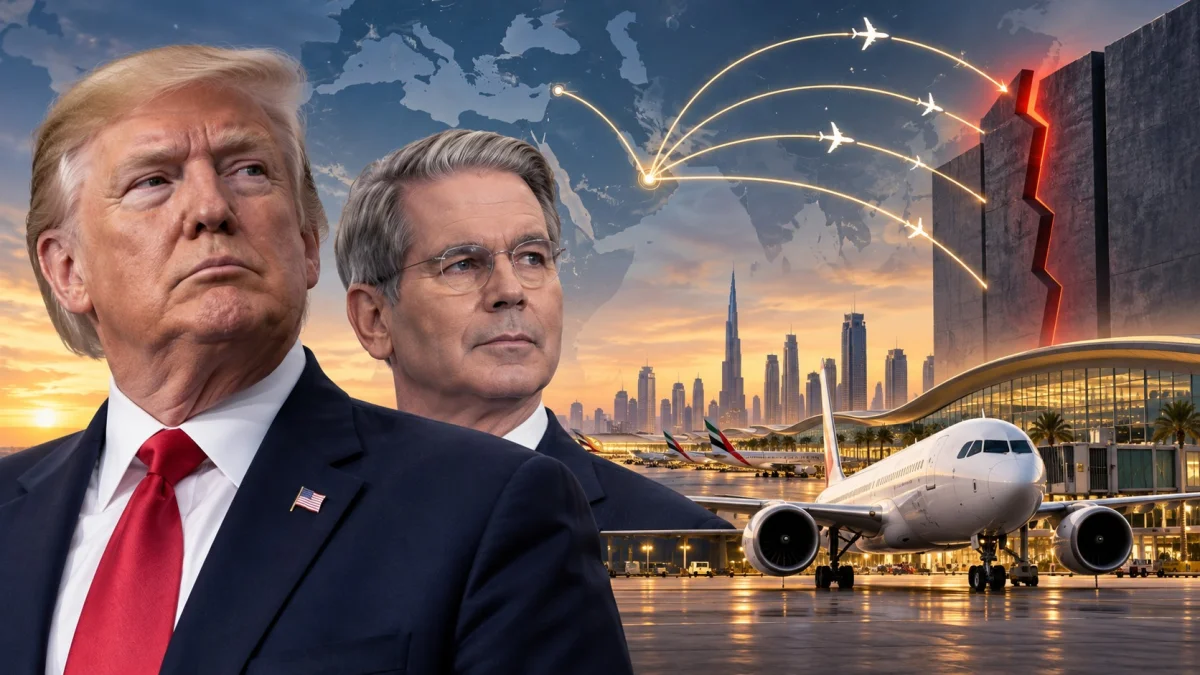
The United Arab Emirates suspended all flights by Iranian airlines until further notice on Thursday as a U.S. secondary-sanctions deadline aimed at grounding Iran’s civil fleet took effect, Reuters and The National reported.
The General Civil Aviation Authority said the decision, effective Thursday, was made in compliance with a U.S. ban prohibiting Iranian airlines from operating at airports worldwide, The National reported. Washington had set a September 23 deadline for global companies to stop doing business with Iranian carriers or face secondary sanctions designed to knock violators out of the dollar system, both outlets noted. The move is the first large, visible impact of a U.S. policy shift that targets companies in third countries dealing with Iranian firms rather than Iranian entities alone.
U.S. Treasury Secretary Scott Bessent told CNBC that when Iranian airlines land, airports “cannot provide them with fuel, you cannot provide them with landing services, you cannot sell them tickets, or you will be knocked out of the dollar system,” according to The National. President Donald Trump has described the wider secondary-sanctions push as “economic D-Day,” Reuters reported, comparing the campaign to the World War II assault on Nazi-controlled France. With the U.S.-Israeli war against Iran largely stalemated for months on the battlefield, Washington is leaning harder on financial pressure to isolate Tehran’s aviation network.
Iran’s Tasnim news agency said flights had also been shut down to Oman, Georgia and Azerbaijan, and to the Iraqi capital Baghdad, with authorities working to route traffic to Najaf, a major Shi’ite pilgrimage destination, Reuters reported. Tehran’s Imam Khomeini Airport still listed scheduled links to destinations including Afghanistan, Armenia, China, Iraq, Pakistan, Tajikistan and Turkey on Thursday, but no flights appeared to or from nearby Gulf states that have long been among Iran’s most important business and travel corridors. Other Gulf countries also appeared to have restricted flights as the deadline passed.
The airline suspension sits inside a broader Emirati tightening. The UAE Central Bank this week barred Bank Melli Iran—the country’s largest lender, with eight UAE branches including a regional office—from financial transactions with Iran over anti-money-laundering findings, The National reported. Abu Dhabi last month suspended all trade, commercial and financial transactions with Iran after attacks on UAE-owned tankers and Tehran’s rejection of U.S. talks. The GCAA said it would update authorities and the public as geopolitical and regulatory conditions shift, without setting a date for lifting the suspension.
Separately on Thursday, Saudi Arabia said it intercepted six ballistic missiles fired by Yemen’s Houthi fighters after emergency alerts for areas including Mecca, Jeddah and Yanbu, the main Saudi Red Sea oil port, Reuters reported. The Houthis said they had fired dozens of missiles and drones at Saudi targets and claimed strikes on military sites in Jazan province. A Saudi-led coalition vowed to respond firmly to what it called violations by the “terrorist Houthi militia,” while fighting along the Taiz-Aden corridor continued to kill and displace civilians, according to United Nations figures cited by Reuters.
Readers following regional escalation on Daily News will find this package focused on the UAE flight halt and the secondary-sanctions deadline, not on earlier Strait of Hormuz or port-blockade storylines already on the desk. A sustained air cutoff could deepen Iran’s isolation and intensify an economic crisis that already includes a U.S. blockade of Iranian ports at sea, Reuters noted. One Tehran resident described daily life to Reuters as living in an “open-air prison.”
Iran has warned that enforcing a U.S.-mandated air blockade could escalate further; a senior Iranian official on Wednesday threatened to make airports “unusable” in any regional country that abides by the ban, according to Reuters. For now, the Middle East’s largest travel hub has grounded Iranian carriers, neighboring destinations are reporting similar cuts, and Trump’s “economic D-Day” framing has moved from speech to runway as secondary sanctions begin to reshape regional aviation.
What's Your Reaction?
 Like
0
Like
0
 Dislike
0
Dislike
0
 Love
0
Love
0
 Funny
0
Funny
0
 Wow
0
Wow
0
 Sad
0
Sad
0
 Angry
0
Angry
0

"iShook Opinion" by Beni E Rachmanov, CEO & Founder of iShook. Explore captivating perspectives on entertainment, lifestyle, and sports at ishookdaily.com. Your go-to for engaging insights.
















Comments (0)