
Tokyo Court Extends Publicity Rights to Human Voices
Tokyo District Court says human voices can be protected under publicity rights in Kenjiro Tsuda’s TikTok AI-voice case, per The Guardian and The Mainichi.
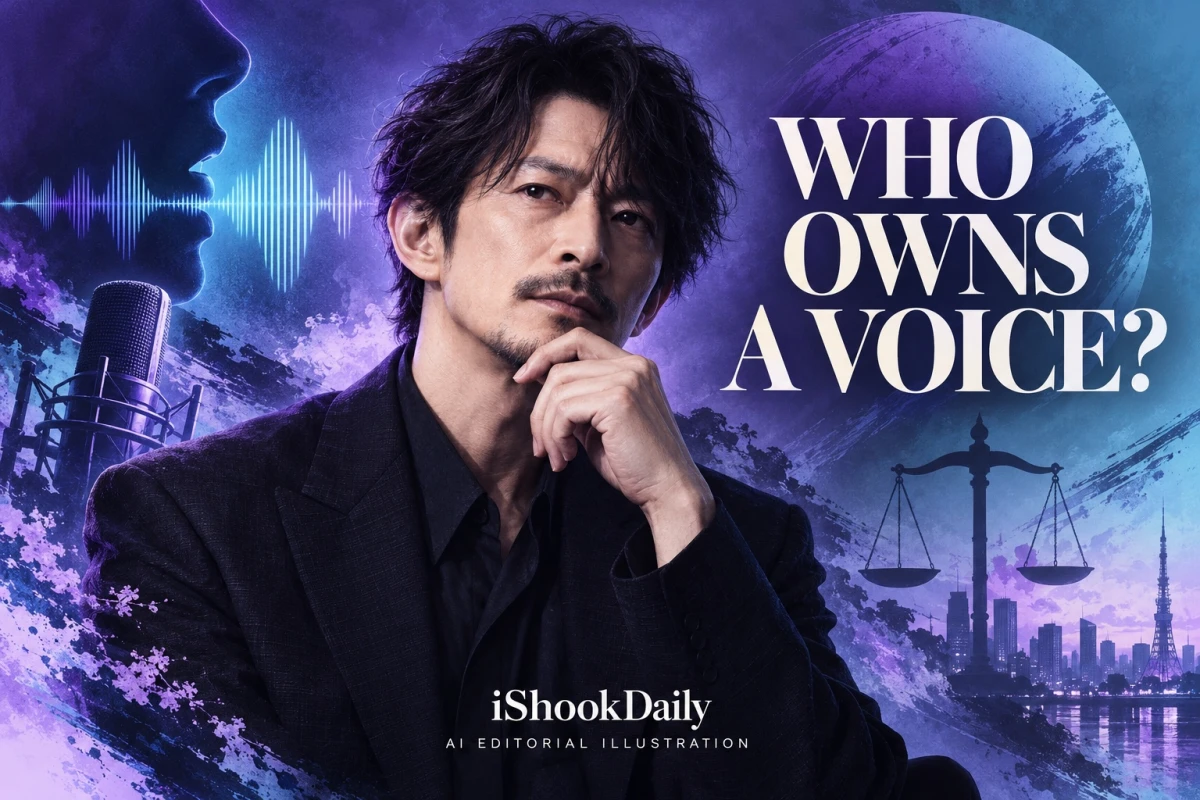
A Tokyo District Court ruling has put human voices under Japan’s publicity-rights umbrella for the first time, in a closely watched case brought by anime voice actor Kenjiro Tsuda against TikTok over clips he said cloned his baritone, The Guardian and The Mainichi reported after the Sept. 30 decision.
Presiding Judge Aya Takahashi framed a voice as “as symbolic of one’s personality as portraits are,” The Guardian wrote, and said unauthorized use can infringe publicity rights when the purpose is to exploit that commercial appeal. The Mainichi notes the court went out of its way to state the principle even though the disputed TikTok account had already been deleted after media coverage of the suit, so Tsuda’s narrow request—that the platform remove the videos—was dismissed as moot.
Tsuda, widely known for voicing Kento Nanami in Jujutsu Kaisen, filed in November 2025 after an anonymous account posted 188 videos between July 2024 and September 2025 about urban myths, the occult, and trivia. He argued the narration used a deep, “lustrous” voice that could only be his and that the clips rode his popularity; TikTok countered that the audio was a generic male voice and any resemblance was subjective, both outlets recount.
The court did not decide whether Tsuda’s voice was actually imitated or whether generative AI produced the narration, The Mainichi emphasizes. That factual gap matters: the judgment is best read as a landmark legal signal, not a finding that any specific deepfake matched Tsuda note-for-note. Attorney Takashi Hirano, who represented Tsuda, told The Mainichi the clarity that unauthorized voice use can violate publicity rights should deter similar harm.
Complaint materials cited by The Guardian and Kyodo-sourced coverage said the account once had more than 200,000 subscribers and that the poster allegedly earned roughly ¥500,000 to ¥750,000 a month. Japan’s Justice Ministry has already issued interpretive guidance that uploading social videos that mimic real people’s voices for revenue may violate rights; The Mainichi says the district court’s language aligns with that panel view and could encourage more removal and damages claims as generative AI spreads.
Voice actors and unions have warned that years of training are at stake when AI clones circulate without consent. TikTok said it would respect the judgment while studying the details and continue balancing technology development with rights protection, according to The Guardian.
For readers following entertainment-tech rights on Daily News, verified as of Sept. 30–Oct. 1 reports: Tokyo District Court recognized voice publicity rights in principle; Tsuda’s takedown request was dismissed because the clips were already gone; the court did not rule on whether AI cloning of his voice was proven; the case is widely described as Japan’s first of its kind on generative-AI voice identity.
What's Your Reaction?
 Like
0
Like
0
 Dislike
0
Dislike
0
 Love
0
Love
0
 Funny
0
Funny
0
 Wow
0
Wow
0
 Sad
0
Sad
0
 Angry
0
Angry
0

"iShook Opinion" by Beni E Rachmanov, CEO & Founder of iShook. Explore captivating perspectives on entertainment, lifestyle, and sports at ishookdaily.com. Your go-to for engaging insights.















Comments (0)