
Cambridge Dictionary Picks 'Human' as 2026 Word of the Year
Cambridge Dictionary named "human" its 2026 Word of the Year on Nov. 18, citing a renewed focus on human-made work in the age of artificial intelligence, with "analogue," "agent," "wholesome" and "chic" on its shortlist.
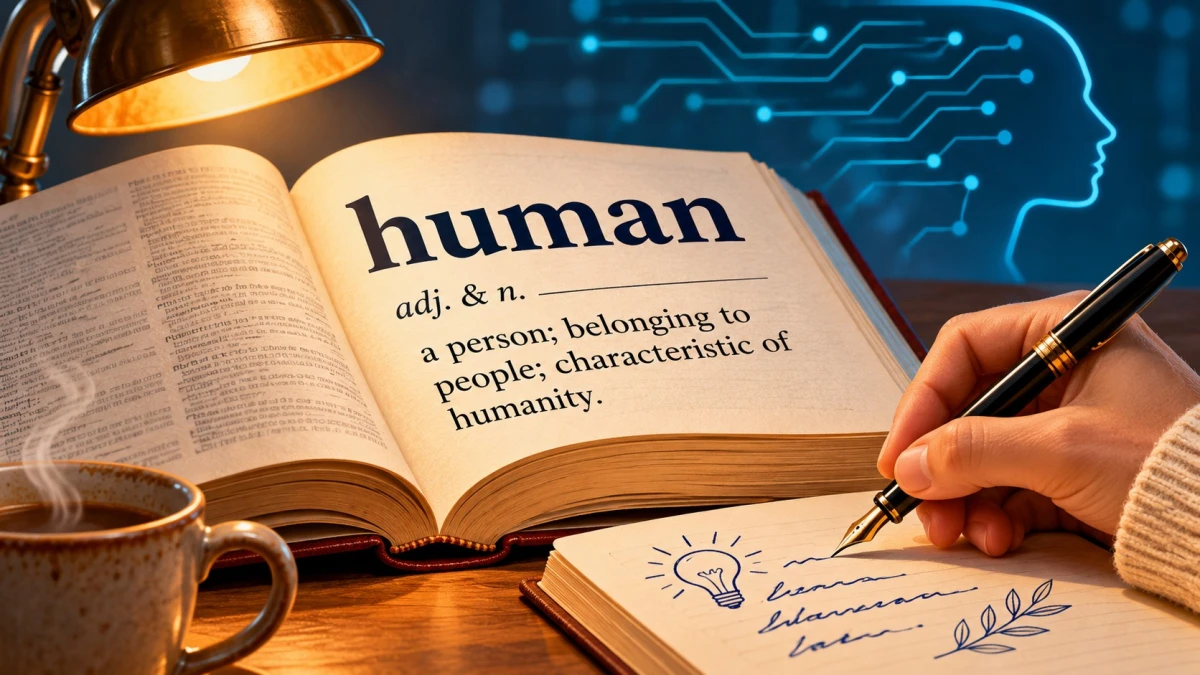
Cambridge Dictionary has named "human" its Word of the Year for 2026, choosing a word that entered English centuries ago to describe a year in which artificial intelligence pushed people to spell out what is made by people and what is made by machines. The choice was announced on Wednesday, Nov. 18, in the United Kingdom, according to CBC News, and was reported by the BBC, The Guardian and Euronews.
The dictionary defines the word as "having the qualities, faults, and feelings that people have, as opposed to gods, animals, or machines." In an explanation of its choice quoted by CBC News, the dictionary said the adjective is "increasingly seen in compounds such as human-written, human-generated, and human-made," and "now also denotes that something is created by or typical of people as opposed to AI."
Why the Dictionary Chose "Human"
Colin McIntosh, a lexicographer at Cambridge Dictionary, said in the publisher's announcement that "AI is changing how we talk about being human." He added: "Fears about what humans may lose when we outsource our thinking have made us reconsider the extent to which we rely on AI: from top mathematicians to teachers of young children."
In a statement quoted by CBC News, McIntosh said 2026 "has been all about a refound appreciation of the human factor in what we consume (with a consequent human premium)," and that "a new value is being placed on the human element in our lives in general." He said that trend was "confirmed by our analysis of the language data, internet trends, and search habits."
The BBC reported that McIntosh's research found use of the word "human" has grown four-fold since 1900. He told the BBC that "man" was once used in that sense far more often but is no longer considered acceptable to describe both men and women. He also noted that "human" did not enter Middle English until the 14th century, arriving from French.
Public Figures Cited in the Announcement
Cambridge University Press & Assessment, which publishes the dictionary, listed public statements from 2026 that it said reflected the theme. They included Microsoft co-founder Bill Gates's case for "human reserved jobs," such as caregiving, and a warning from Nobel laureate Geoffrey Hinton: "We're creating alien beings. I'm willing to be selfish and choose humans." The publisher also cited Pope Leo XIV, who wrote of new forms of "dehumanization" and of a "pressing duty to remain profoundly human."
From the entertainment world, the announcement cited actors Scarlett Johansson and Cate Blanchett, musicians LeAnn Rimes and Billie Eilish, and authors Jodi Picoult and Jonathan Franzen, who challenged what they called an "assault on human creativity." It also said Matthew McConaughey trademarked clips of his voice, his face and his catchphrase "alright, alright, alright" to protect against unauthorized digital reproduction, and that Taylor Swift trademarked her voice and image in April.
In publishing, the Authors Guild launched a "Human Authored" mark for books, according to the announcement. The Hindu BusinessLine reported that the dictionary also pointed to companies that once added disclaimers when they used the technology and now highlight when work is human-made, as well as a music tool called "Played By Humans," launched in April by the company Jazz Is Dead to verify human-made music.
Analogue, Wholesome and Chic on the Shortlist
Four other words made the 2026 shortlist: "analogue," "agent," "wholesome" and "chic," according to CBC News and The Hindu BusinessLine.
Several of the contenders reflect lifestyle trends. Cambridge defines "analogue" as relating to activities, experiences or objects that do not involve the internet or digital technology, and said posts about an "analogue lifestyle" that championed screen-free activities such as knitting, reading a printed book and listening to vinyl records trended on social media.
"Wholesome," defined as "good for you, and likely to improve your life either physically, morally, or emotionally," was described by Euronews and The Guardian as the shortlist's non-tech contender. The dictionary noted that several teams went viral at the 2026 FIFA World Cup for cleaning their changing rooms and leaving thank-you notes and gifts. "Agent" refers to an artificial intelligence system that can operate without human control.
The Hindu BusinessLine reported that the dictionary's blog also identified "humanmaxxing," the pursuit of performance and longevity through fitness tracking and supplements, and "friction-maxxing," making daily life slightly less convenient to cut reliance on screens.
New Words and Words to Watch
Among the popular new additions to the dictionary in 2026 were "looksmaxxing," the activity of making oneself as physically attractive as possible, which The Guardian said has been associated with the online manosphere; "aura farming," doing things with the intention of projecting an admired personality, often on social media; and "air jail," a method of training a dog by holding it off the ground for a period of time.
The dictionary said it is also considering "weather whiplash," for a quick swing between weather extremes; "FOBO," or "fear of becoming obsolete," the worry that a job could be performed by artificial intelligence; and "dusking," the practice of watching daylight turn to darkness as a form of relaxation, a Dutch tradition the dictionary said was revived by writer Marjolijn van Heemstra.
Other Dictionaries' Picks
Cambridge's choice follows other 2026 selections. On Nov. 3, Collins Dictionary named "mogging," slang for outshining someone or something, its word of the year, the Associated Press reported, saying usage rose 210% in 2026. Collins' list also included "fricy," for food or drinks that are both fruity and spicy, and "carspreading," for the trend toward longer, wider and heavier cars. Euronews reported that Dictionary.com chose "maxxing."
Cambridge's 2025 word of the year was "parasocial," describing one-way relationships that fans form with celebrities and, increasingly, with artificial intelligence companions, CBC News reported. In 2023, Cambridge chose "hallucinate," the same year Collins picked "AI," according to Euronews.
Sources
- Cambridge University Press & Assessment: 'Human' is Cambridge Dictionary's Word of the Year 2026
- BBC News: 'Human' is Cambridge Dictionary Word of the Year
- The Guardian: 'Human' wins Cambridge dictionary's word of the year
- Euronews: 'Human': Cambridge Dictionary's Word of the Year 2026
- CBC News: Cambridge Dictionary chooses 'human' as word of the year
- The Hindu BusinessLine: Amid AI's surge, Cambridge Dictionary picks 'human' as Word of the Year 2026
- Associated Press via Boston 25 News: Collins Dictionary chooses 'mogging' as its 2026 word of the year
What's Your Reaction?
 Like
0
 Dislike
0
 Love
0
 Funny
0
 Wow
0
 Sad
0
 Angry
0
"iShook Opinion" by Beni E Rachmanov, CEO & Founder of iShook. Explore captivating perspectives on entertainment, lifestyle, and sports at ishookdaily.com. Your go-to for engaging insights.











Comments (0)