
U.S. Loses Measles Elimination Status After 26 Years as Mexico and Bolivia Also Lose Designation
The Pan American Health Organization said Nov. 17, 2026, that the United States, Mexico and Bolivia have lost their measles elimination status after the same virus strain circulated for more than 12 months, as U.S. cases this year passed 5,400.
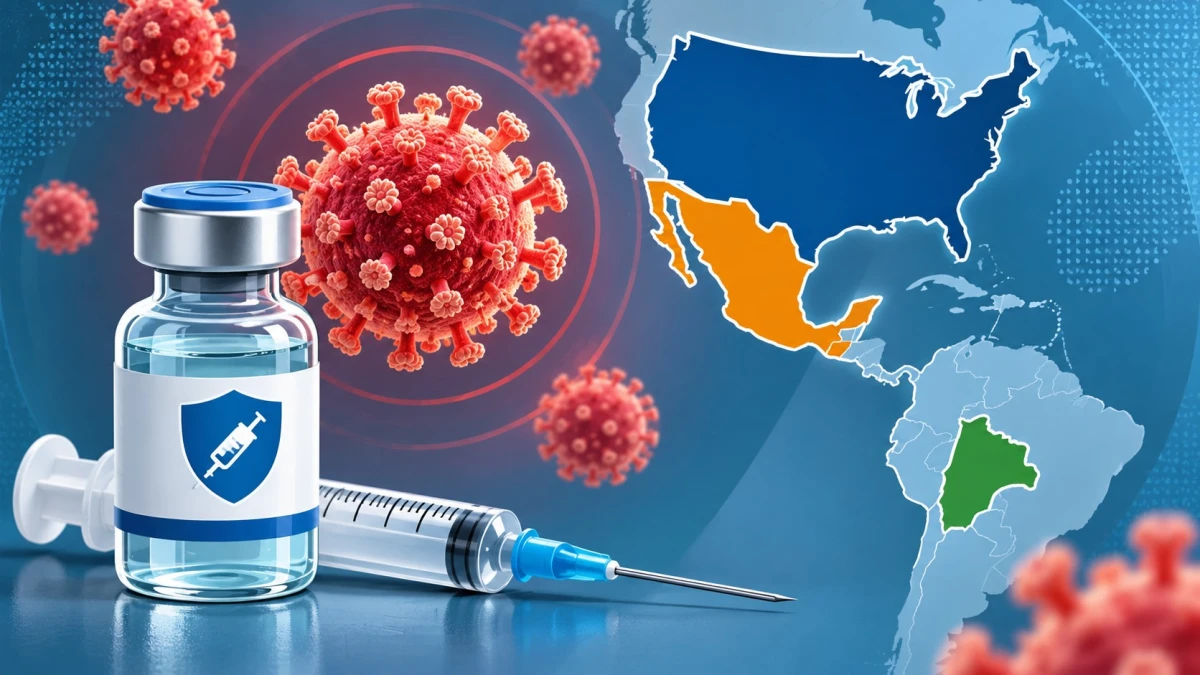
The United States has lost the measles elimination status it earned in 2000, the Pan American Health Organization (PAHO) announced on Tuesday, Nov. 17, 2026, after an independent commission concluded that the same strain of the virus had circulated inside the country without interruption for more than a year. Mexico and Bolivia lost their status in the same review, marking a further setback for a region that was the first in the world to eliminate the disease.
The decision means measles is once again considered endemic in the United States, ending a designation that Reuters reported had stood for 26 years.
How the Decision Was Made
PAHO's Measles and Rubella Elimination Regional Monitoring and Re-Verification Commission met in Washington, D.C., from Nov. 10 to 13 to review epidemiological and laboratory data from all 47 reporting countries and territories in the Americas. Under the commission's criteria, endemic transmission is considered re-established when the same measles virus genotype and lineage circulates for 12 months or more within a country. PAHO Director Dr. Jarbas Barbosa accepted the commission's findings and communicated the change of status to each country's health authorities.
According to PAHO, the U.S. outbreak that triggered the decision began on Jan. 20, 2025, meaning the 12-month threshold was reached on Jan. 20, 2026. Mexico's outbreak began on Feb. 1, 2025, and Bolivia's on April 16, 2025. Science News reported that the U.S. chain of transmission traces back to an outbreak that started in West Texas in early 2025. NBC News reported that the commission, made up of eight public health experts, examined genetic data from locally acquired cases to determine whether outbreaks in different states were linked, and also weighed vaccination coverage, surveillance quality and outbreak response capacity.
"Losing measles elimination status is much more than losing a public health designation. It means the virus has circulated for a prolonged period, putting families and communities at risk of preventable illness, hospitalization and death," Barbosa said in a statement. At a news conference, he called the figures "a serious warning for our region" and said measles "is resurging globally amid persistent gaps in vaccination."
Record Case Counts
The U.S. Centers for Disease Control and Prevention had confirmed 5,412 measles cases in 2026 as of Nov. 12, according to Reuters and Science News, the highest annual total since the early 1990s. Science News reported nearly 2,300 additional cases in 2025. State health departments have reported 10 measles deaths this year, NBC News and Reuters reported, and Science News said states have recorded 13 deaths since the West Texas outbreak began, of which the CDC so far recognizes nine. NBC News reported that at least four of this year's deaths were babies too young to be vaccinated.
UNICEF, citing CDC data, said 96% of this year's U.S. cases have been in people who were unvaccinated or whose vaccination status was unknown. Children under 5 account for 18% of cases and those aged 5 to 19 for 40%, the agency said.
Vaccination coverage has declined. NBC News reported that 92% of U.S. kindergartners were vaccinated against measles in the 2025-26 school year, down from 95% in 2019-20, the level health officials consider necessary to prevent outbreaks. The BBC reported that a Pennsylvania outbreak has infected more than 1,400 people and killed seven, according to state officials.
Mexico, Bolivia and the Wider Region
Across the Americas, PAHO said 58,213 confirmed measles cases and 82 deaths had been reported as of Nov. 13, 2026, compared with 12,806 cases during the same period last year. UNICEF said Mexico has confirmed more than 13,900 cases so far this year, its highest number since the 1989-90 epidemic, while Bolivia has confirmed more than 100.
Officials in both countries pointed to progress. Bolivian Health Minister Marcela Flores said cases had fallen 83% this year, crediting vaccination, contact tracing, border controls and community surveillance, Reuters reported. Mexican authorities said more than 40.9 million measles vaccine doses had been administered and that coverage had reached 90%.
The region as a whole lost its measles-free verification in November 2025, after endemic transmission was re-established in Canada. PAHO said Canada has since interrupted the chain of transmission linked to that outbreak and is working to regain its status.
U.S. Government Response
In a joint statement on Nov. 17, the CDC and its partners said they were "committed to stopping measles outbreaks, protecting Americans, and regaining measles elimination status," pledging to encourage MMR vaccination, expand access to vaccines and "hold ourselves accountable for measurable progress."
CDC Director Dr. Erica Schwartz said the designation itself was not what protected Americans. "Vaccination does," she said, according to the BBC, adding that the agency had invested $100 million in state and local health departments to reach communities where transmission is occurring. Health and Human Services Secretary Robert F. Kennedy Jr. wrote on social media that he continues "to recommend MMR vaccination as the most effective way to prevent measles" and that the department is "working to close vaccination gaps and rebuild public trust."
Kennedy has previously questioned the safety of the MMR vaccine, and the BBC and NBC News reported that public health experts link federal officials' statements to declining vaccine confidence. Kennedy has argued that the rise in cases began before he took office, the BBC reported.
What Comes Next
To regain its status, the United States must submit a corrective action plan to PAHO and then demonstrate 12 months without endemic transmission, according to PAHO officials quoted by Reuters. Dr. Daniel Salas, executive manager of PAHO's immunization program, said the U.S. plan is expected in the coming weeks. PAHO said sustaining at least 95% coverage with both vaccine doses in every community remains essential, and noted that the region regained elimination in 2024 after earlier losses in Venezuela and Brazil.
"This is a serious warning for our Region, but it is not an irreversible setback," Barbosa said.
Sources
- PAHO: PAHO urges countries to step up efforts to stop measles outbreaks (Nov. 17, 2026)
- PAHO: Measles in the Americas, Questions and Answers (Nov. 17, 2026)
- CDC Newsroom: Joint Statement, Loss of U.S. Measles Elimination Status (Nov. 17, 2026)
- Reuters: US loses measles elimination status after nearly three decades (Nov. 17, 2026)
- AP News: Measles is no longer considered eliminated in the US and Mexico (Nov. 17, 2026)
- NBC News: U.S. loses measles-elimination status, erasing decades of progress (Nov. 17, 2026)
- BBC News: US loses measles elimination status (Nov. 17, 2026)
- UNICEF: Measles spreading in places where the disease was under control (Nov. 17, 2026)
- Science News: The U.S. just lost its measles elimination status. What now?
What's Your Reaction?
 Like
0
 Dislike
0
 Love
0
 Funny
0
 Wow
0
 Sad
0
 Angry
0

"iShook Opinion" by Beni E Rachmanov, CEO & Founder of iShook. Explore captivating perspectives on entertainment, lifestyle, and sports at ishookdaily.com. Your go-to for engaging insights.
















Comments (0)