Audacy: Mid-Sized Podcasts Beat Celebrity Shows on Ad Efficiency
Audacy State of Audio finds mid-sized podcasts beat celebrity shows on CPA while podcast ads deliver 4.2x ROI, per Radio Ink and NetInfluencer.
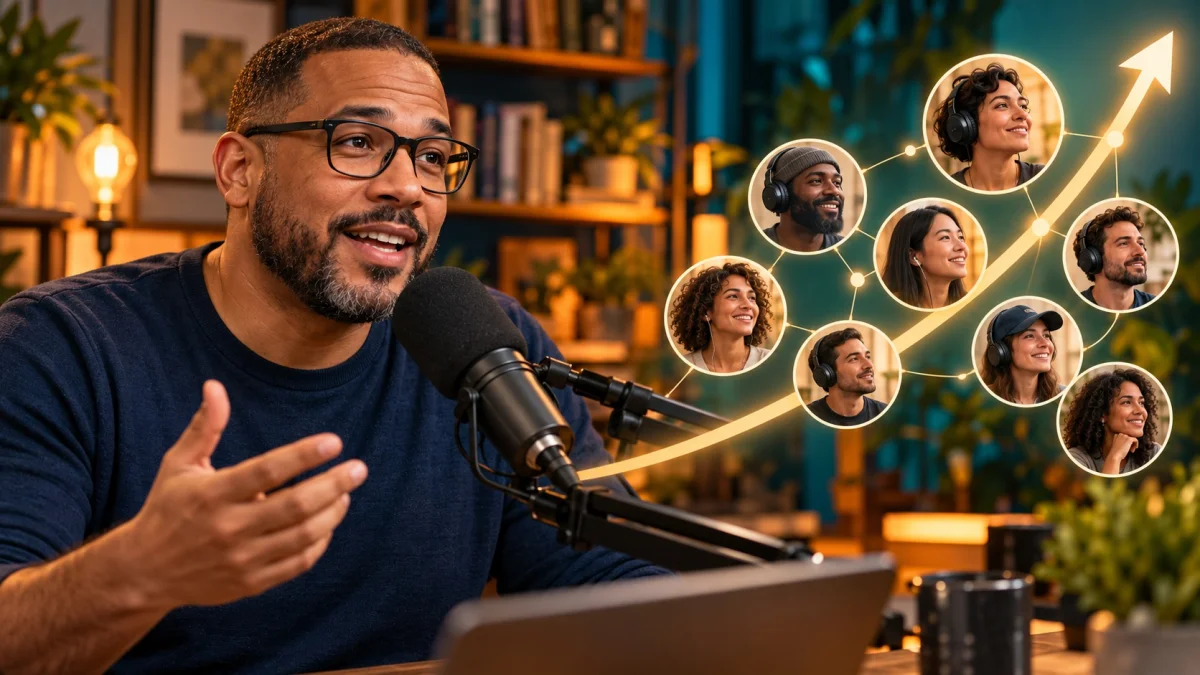
Audacy’s latest State of Audio report argues that mid-sized podcasts and trusted topic experts are outperforming celebrity-scale buys on advertising efficiency, with podcast ads delivering a 4.2x return on investment ahead of social, display, video, and search, Radio Ink and NetInfluencer reported.
The econometric study from Acast and Annalect cited in the report puts podcast advertising’s average ROI at 4.2 times spend, ahead of social media at 3.6x, online display at 3.2x, digital video at 3x, and search at 2.2x. Podcast ad spend is projected to reach $3.0 billion in 2026, per eMarketer figures quoted by both outlets.
Shows with fewer than 250,000 monthly listeners produced a $70 cost per acquisition versus $90 for shows above 1 million listeners — a 22% efficiency edge for mid-sized titles — according to Podscribe’s Q4 2024 benchmarks cited in the report. Audacy’s Power of Influencers 2026 survey of 1,000 adults found listeners are 27% more likely to be influenced by topic experts than by well-known celebrities.
Trust sits at the center of the pitch. Seventy-five percent of respondents named podcast hosts the most authentic advertising voice, ahead of cable TV presenters (63%), YouTube streamers (58%), and social media influencers (54%), Radio Ink reported. Fifty-five percent said their strongest creator connection starts in a podcast feed, versus 15% who cited social media.
Average monthly spend per new podcast advertiser more than doubled in a year, from $20,000 to $42,000, and new advertiser growth reached 129% over five years, NetInfluencer said, citing eMarketer and Magellan AI data in the Audacy package. Edison Research figures in the report put monthly U.S. podcast listenership at 158 million, with weekly listening time up 386% over the past decade.
For industry readers tracking monetization on Podcasts, the report’s practical message is to buy influence and subject expertise rather than maximum reach alone. Video still matters as discovery — 57% of Americans both watch and listen, and 72% said they started an audio-only habit after first finding a show’s video version — but Audacy frames video as a complement, not a replacement.
Listeners draw a hard line on AI. A majority approve of AI for back-end work such as research, transcription, and editing, yet support collapses when AI reaches the host’s voice. NetInfluencer cited Audacy Podcast Metrics data finding only 25% approved of an AI-generated host voice, while 62% view AI as at least somewhat a threat to podcast credibility.
Separate figures in the report underscore host-driven commerce: 76% of listeners have purchased a brand after hearing a podcast creator’s ad, and Acast’s Podcast Pulse data cited by Audacy found 84% have changed their mind about something because of a podcaster. That combination of trust metrics and CPA benchmarks is what Audacy is selling to media planners still defaulting to the biggest names.
Verified facts as of the September 2026 State of Audio coverage: podcast ad ROI cited at 4.2x; mid-sized shows 22% lower CPA than celebrity-scale titles; hosts rated most authentic ad voice at 75%; listeners 27% more likely to trust topic experts over celebrities; 2026 podcast ad spend projected at $3.0 billion. How buyers reallocate budgets toward mid-tier expert shows will decide whether the report becomes a planning shift or another efficiency footnote.
What's Your Reaction?
 Like
0
Like
0
 Dislike
0
Dislike
0
 Love
0
Love
0
 Funny
0
Funny
0
 Wow
0
Wow
0
 Sad
0
Sad
0
 Angry
0
Angry
0
"iShook Opinion" by Beni E Rachmanov, CEO & Founder of iShook. Explore captivating perspectives on entertainment, lifestyle, and sports at ishookdaily.com. Your go-to for engaging insights.











Comments (0)