Trump at UNGA Defends Iran and Venezuela Action, Pushes ‘Superintelligence’
Trump defends Iran and Venezuela military action at UNGA Tuesday, urges pressure on Tehran, and pushes an AI 'superintelligence' rebrand, per UN News.
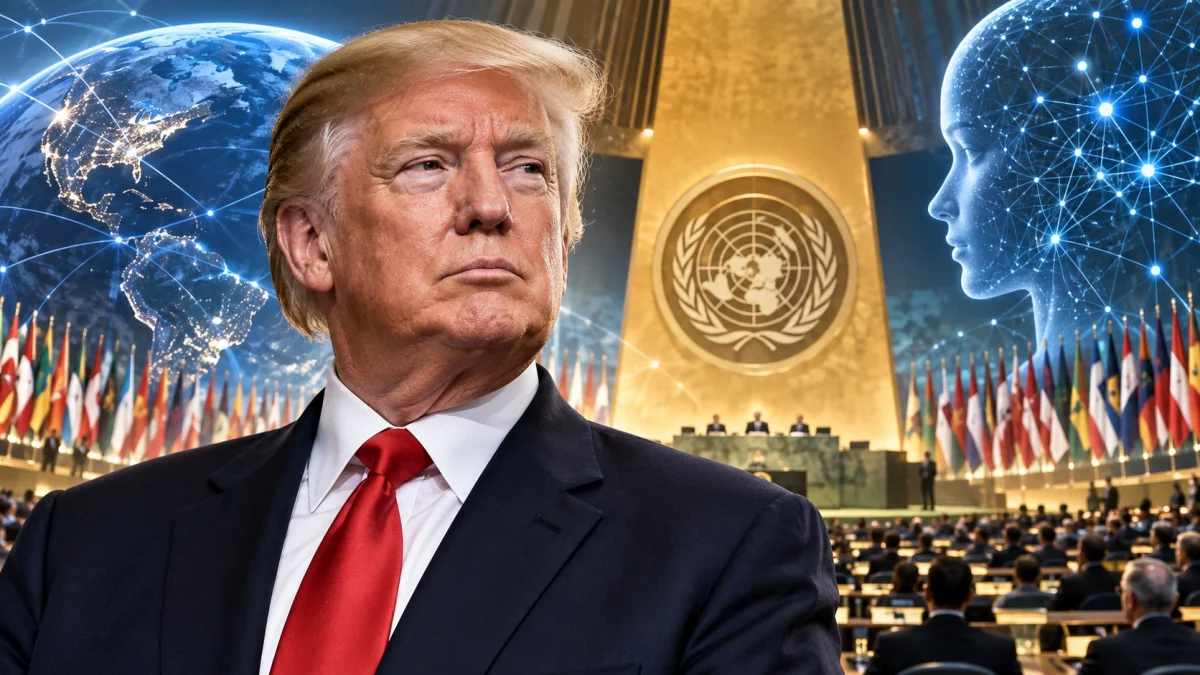
US President Donald Trump used his address to the United Nations General Assembly on Tuesday to defend recent American military action against Iran and in Venezuela, urge continued economic pressure on Tehran, and argue that artificial intelligence should be rebranded as “superintelligence,” according to UN News. The speech opened the 81st General Debate in New York as world leaders gathered amid overlapping wars, energy shocks, and a widening contest over advanced technology.
Calling Iran “the number one sponsor of terror,” Trump told the Assembly Hall that for 51 years “the fanatical Iranian regime” had spread “carnage and chaos” across the Middle East and beyond. He said he would “never allow Iran to have a nuclear weapon,” claimed US operations had severely weakened Iranian naval assets, air defenses, and missile production, and framed a stark choice between a deal that would let Iran rebuild and a path he described as annihilating the Islamic Republic. He also predicted an agreement would eventually be reached, saying, “I believe we’ll make a deal.”
Deutsche Welle reported that Trump’s roughly half-hour address mixed hard-line rhetoric with talk of diplomacy. He urged countries to support the “complete economic isolation of Iran” until Tehran ended attacks on commercial shipping and support for terrorism, while later telling reporters that American and Iranian officials had held a roughly three-hour meeting on the UN sidelines that he called “very good” and “very productive,” with another session expected soon.
On the Western Hemisphere, Trump highlighted what he described as a US military operation in Venezuela that resulted in the arrest of President Nicolás Maduro. He said Washington was working with Venezuelan leaders toward “a much better future for the Venezuelan people” and announced a major oil agreement between the two countries. DW quoted him calling the arrangement “perhaps the biggest deal ever made” and adding, “To the victor belong the spoils,” as Venezuela’s acting president Delcy Rodríguez watched from the chamber. He also cited cartel designations in Mexico, negotiations aimed at “a fundamental change” with Cuba, and a Greenland security arrangement with Denmark that he cast as strategically vital for NATO’s Arctic posture.
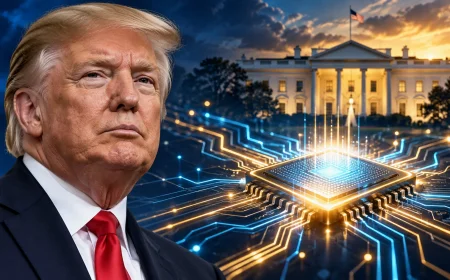
A substantial section of the speech focused on technology. Trump argued that the word “artificial” makes intelligence sound fake and that leadership in what he called superintelligence would decide future economic and geopolitical winners. “Whoever wins superintelligence wins,” he declared, saying the United States would encourage development while monitoring risks. DW noted that he also spoke against what he termed globalist efforts such as joint taxes or international restrictions on AI, casting national sovereignty against multilateral controls.
Trump renewed criticism of several international bodies, describing the International Criminal Court as full of “evil people” with no jurisdiction over the United States and calling on nations to withdraw. He was similarly critical of the UN Human Rights Council, UNESCO, and the International Maritime Organization. He claimed to have helped end eight conflicts since returning to office, listing disputes involving Cambodia and Thailand, Kosovo and Serbia, the Democratic Republic of the Congo and Rwanda, Pakistan and India, Armenia and Azerbaijan, and Gaza, while saying efforts continue on Russia and Ukraine with the message, “It’s time to stop the killing.”
The Assembly session unfolded against a crowded diplomatic calendar. UN News and DW both placed Trump among the first major speakers after Brazilian President Luiz Inácio Lula da Silva, with French President Emmanuel Macron and others delivering separate appeals on Gaza, Ukraine, and AI governance. For markets and Middle East risk watchers, Tuesday’s podium signal was clear: continued pressure on Iran, openness to a negotiated off-ramp, claims of leverage in Venezuela’s oil sector, and a high-profile push to rename and own the global AI contest under the banner of superintelligence.
As the six-day General Debate continues through next Monday, diplomats will test whether the speech’s harder lines harden negotiating positions or whether the reported US–Iran meeting and Trump’s deal talk create space for follow-up. For now, the record from New York is a defense of force in Iran and Venezuela, a call for economic isolation until Tehran changes course, and an explicit framing of technological leadership as the next great-power race.
What's Your Reaction?
 Like
0
Like
0
 Dislike
0
Dislike
0
 Love
0
Love
0
 Funny
0
Funny
0
 Wow
0
Wow
0
 Sad
0
Sad
0
 Angry
0
Angry
0
"iShook Opinion" by Beni E Rachmanov, CEO & Founder of iShook. Explore captivating perspectives on entertainment, lifestyle, and sports at ishookdaily.com. Your go-to for engaging insights.













Comments (0)