
Trump Signs US-Denmark-Greenland Arctic Security Deal at UN
Trump signs a US-Denmark-Greenland Arctic security deal at UNGA Tuesday, expanding U.S. bases at Pituffik while keeping Danish control, per AP and CNA.
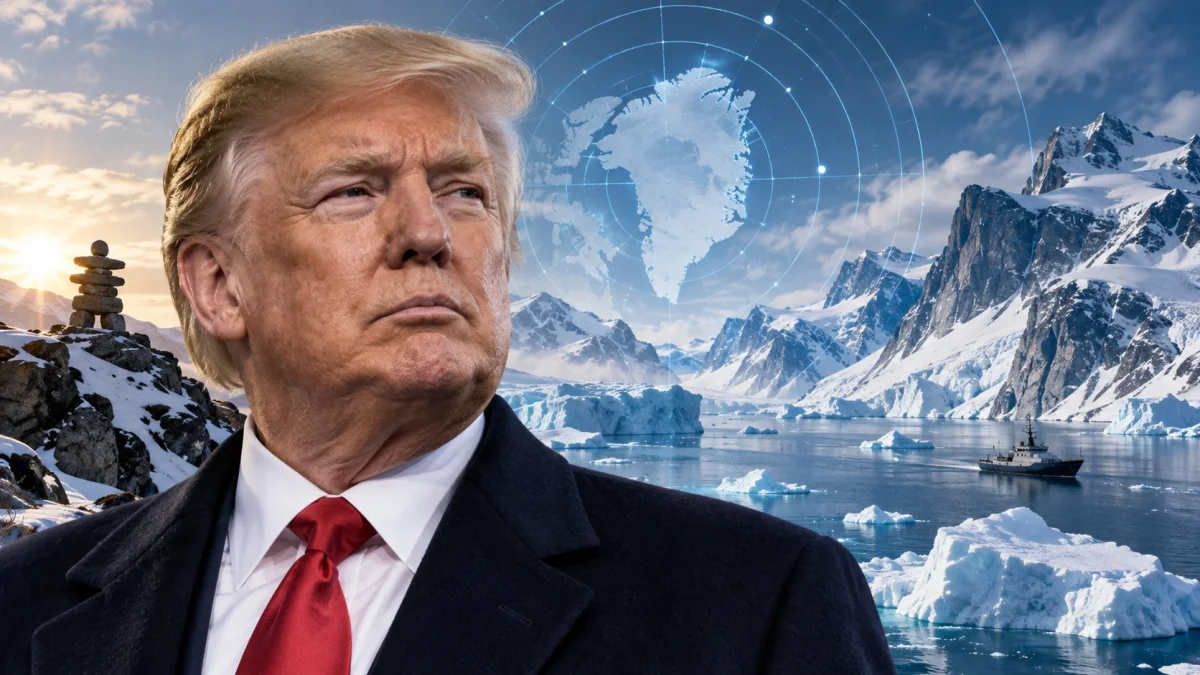
US President Donald Trump signed a trilateral security agreement with Denmark and Greenland on Tuesday on the sidelines of the United Nations General Assembly, expanding American military access on the Arctic island while stopping short of his earlier push to annex the territory, according to Associated Press reporting carried by ABC News. The signing followed months of NATO-rattling tension after Trump repeatedly framed Greenland as a strategic prize that Washington needed to secure against Russia and China.
Trump signed the document with Danish Prime Minister Mette Frederiksen and Greenlandic Prime Minister Jens-Frederik Nielsen after addressing the General Assembly. “This is tremendous for Europe and for the United States and for everybody,” he said before the ceremony, adding that the arrangement would be “incredible” for Greenland. AP noted that he did not answer questions on whether a US acquisition of the island remained off the table, even as the text keeps the territory under Danish sovereignty and affirms Greenland’s path to self-determination.
Channel News Asia, citing Reuters coverage from New York, reported that the deal permits a larger US military presence and may defuse the Arctic standoff that unsettled allies earlier this year. In his UN speech, Trump claimed the accord gives the United States “permanent control over security and all other needs on that territory,” and said no US adversary would be allowed a military foothold or sensitive investment without written approval. CNA noted that the package still requires approval by the parliaments of Denmark and Greenland before it takes full effect.
The published agreement allows Washington to “modernize and expand” activities at Pituffik Space Base in northwest Greenland, where roughly 200 US personnel currently support missile warning, missile defense, and space surveillance for the United States and NATO. It also authorizes new “defense areas” at Narsarsuaq in the south and Mestersvig in the east, and says the United States “may establish additional defense areas” by mutual consent. Contracts for construction, maintenance, and related services are to go to Greenlandic suppliers “to the maximum extent possible,” AP reported.
Broader access language covers aircraft, vessels, and undersea mobility across Greenlandic territory. Signatories cite shared interest in defending NATO’s Arctic approaches, Greenland itself, and the North American continent, including through Trump’s planned “Golden Dome” missile-defense concept. Frederiksen said no decision had been made on the system’s specifics. Non-NATO states are barred from establishing manned or unmanned military installations or a “persistent” military presence unless the parties agree otherwise. The accord has no end date; if Greenland becomes independent, it would remain in NATO and assume Denmark’s rights and obligations under the deal.
Frederiksen called the package “a deal that can last forever” and good for the United States, Greenland, Denmark, and NATO. Nielsen described it as a “win-win-win,” telling Trump that “your security is our security, and our security is your security.” NATO Secretary-General Mark Rutte welcomed the signing on social media as strengthening collective security in a vital region. AP quoted Greenlandic lawmaker Naaja Nathanielsen saying trust had been “tested” during the crisis, yet calling the binding agreement “a huge step in the right direction” for Nuuk’s autonomy ambitions.
The geopolitical backdrop is clear. Greenland’s ice and minerals sit astride emerging Arctic shipping routes, and US force levels there have shrunk since the Cold War peak of thousands of troops across 17 installations. Trump’s January-era talk of taking the island strained relations with a NATO ally and pushed Copenhagen and Nuuk into intensive talks. Tuesday’s ceremony does not erase that history, but it locks in the first major expansion of US military infrastructure on Greenland since the Cold War while preserving Danish control and a Greenlandic role at the table.
For markets, Arctic-risk watchers, and NATO capitals, the immediate signal is de-escalation without full political annexation: more bases, more access, investment screening language that keeps adversarial footholds out, and a diplomatic off-ramp from a dispute that rattled the alliance. Implementation now moves to national legislatures, base planning, and whether “Golden Dome” and follow-on sites become concrete construction schedules rather than UN-week pledges.
What's Your Reaction?
 Like
0
Like
0
 Dislike
0
Dislike
0
 Love
0
Love
0
 Funny
0
Funny
0
 Wow
0
Wow
0
 Sad
0
Sad
0
 Angry
0
Angry
0

"iShook Opinion" by Beni E Rachmanov, CEO & Founder of iShook. Explore captivating perspectives on entertainment, lifestyle, and sports at ishookdaily.com. Your go-to for engaging insights.
















Comments (0)