
Suniel Shetty Joins CBFC, Urges Balance on Film Certification
Suniel Shetty joins India’s reconstituted 18-member CBFC, urging balance between filmmaker freedom and responsibility, per Times of India and Hindustan Times.
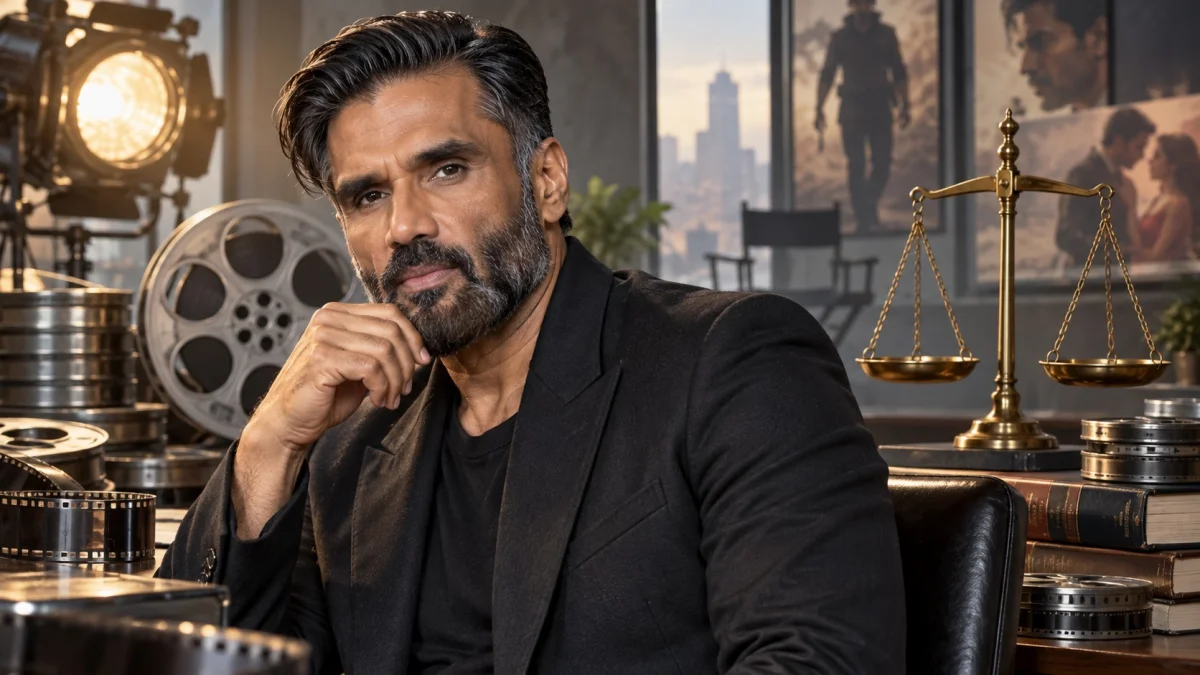
Actor Suniel Shetty has taken up a seat on India’s reconstituted Central Board of Film Certification, telling Bombay Times he wants the panel treated as a certification body rather than a blunt “censor board.” In remarks published Friday, Shetty said there must be “a balance between giving filmmakers the freedom to tell their stories and being responsible towards audiences and the nation,” calling the appointment a privilege after more than three decades in Hindi cinema. The Times of India reported his comments as the newly named 18-member board begins its term.
Shetty said the priorities he hopes to bring are clarity, consistency, and dialogue. Cinema, he argued, is “a very powerful soft power” that shapes perceptions, carries culture, and travels far beyond India’s borders—so that power must be used responsibly even as filmmakers retain room to work. If the board can keep that balance while making certification “smoother, more transparent, and more collaborative,” he said, that would count as meaningful progress. The framing is familiar to industry veterans who have long argued that CBFC decisions swing between protection and overreach; Shetty is positioning himself as a bridge voice rather than a hardliner.
The reconstituted board is an 18-member panel co
Shetty’s own career supplies the industry résumé the appointment is meant to signal. Since his 1992 debut in Balwaan, he has worked across action, drama, and comedy, with credits spanning Mohra, Border, Dhadkan, Hera Pheri, Phir Hera Pheri, Main Hoon Na, LOC: Kargil, and De Dana Dan. That longevity—and his public comfort with mainstream commercial cinema—may matter as the board weighs films that travel on OTT platforms and festival circuits as easily as they do in multiplexes.
Certification politics remain sensitive in Indian film culture. Filmmakers routinely complain about delayed certificates, inconsistent cuts, and political pressure; audiences and advocacy groups press the opposite case when content touches religion, sexuality, or national security. Placing high-visibility actors and musicians on the board is as much a messaging move as an administrative one: it suggests the Centre wants industry faces associated with the process. Whether that translates into faster, clearer decisions will be measured in the next wave of theatrical and streaming releases, not in appointment-day quotes.
For now, Shetty’s Friday interview sets a public tone—certification over censorship, dialogue over diktat—that other new members have echoed in slightly different keys. The reconstituted CBFC has its celebrity roster and its stated philosophy. The harder test arrives when the first contested title lands on the table and “balance” has to become a written certificate rather than a sound bite.
nstituted with immediate effect for three years or until further orders. Alongside Shetty, members include Preity Zinta, Pankaj Tripathi, Manoj Joshi, Prosenjit Chatterjee, Pallavi Joshi, Roopali Ganguly, and Nishigandha Wad. The wider list also features filmmaker Priyadarshan, Grammy-winning musician Ricky Kej, filmmakers Abhishek Jain and Neela Madhab Panda, singer Hansraj Hans, producer Supriya Yarlagadda, writer Yatindra Mishra, and theatre personality Waman Kendre, among others.
Hindustan Times spoke to several appointees about what they hope to change. Prosenjit Chatterjee called the role a “big responsibility,” joking that after years of asking the board not to cut his scenes as a producer, he will now see the other side of the table and wants language cinema better represented. Pallavi Joshi argued that the job is about “giving the right certification to the right content” for the right audience, not blanket bans, and that cinema evolves with time. Rupali Ganguly (also styled Roopali) said she felt “deeply grateful,” noting a personal link through her father’s NFDC service. Yatindra Mishra said he wants to bring a youth perspective rooted in poetry, music, and film research. Ricky Kej described a duty to safeguard artistic expression while serving the public interest.
What's Your Reaction?
 Like
0
Like
0
 Dislike
0
Dislike
0
 Love
0
Love
0
 Funny
0
Funny
0
 Wow
0
Wow
0
 Sad
0
Sad
0
 Angry
0
Angry
0
"iShook Opinion" by Beni E Rachmanov, CEO & Founder of iShook. Explore captivating perspectives on entertainment, lifestyle, and sports at ishookdaily.com. Your go-to for engaging insights.













Comments (0)