
Saudi Arabia Calls Mecca a Red Line After Intercepting Alleged Houthi Drone
Saudi Arabia says it shot down a Houthi drone near Mecca and calls holy-city security a red line; Houthis deny targeting sacred sites, per CNN and NBC News.
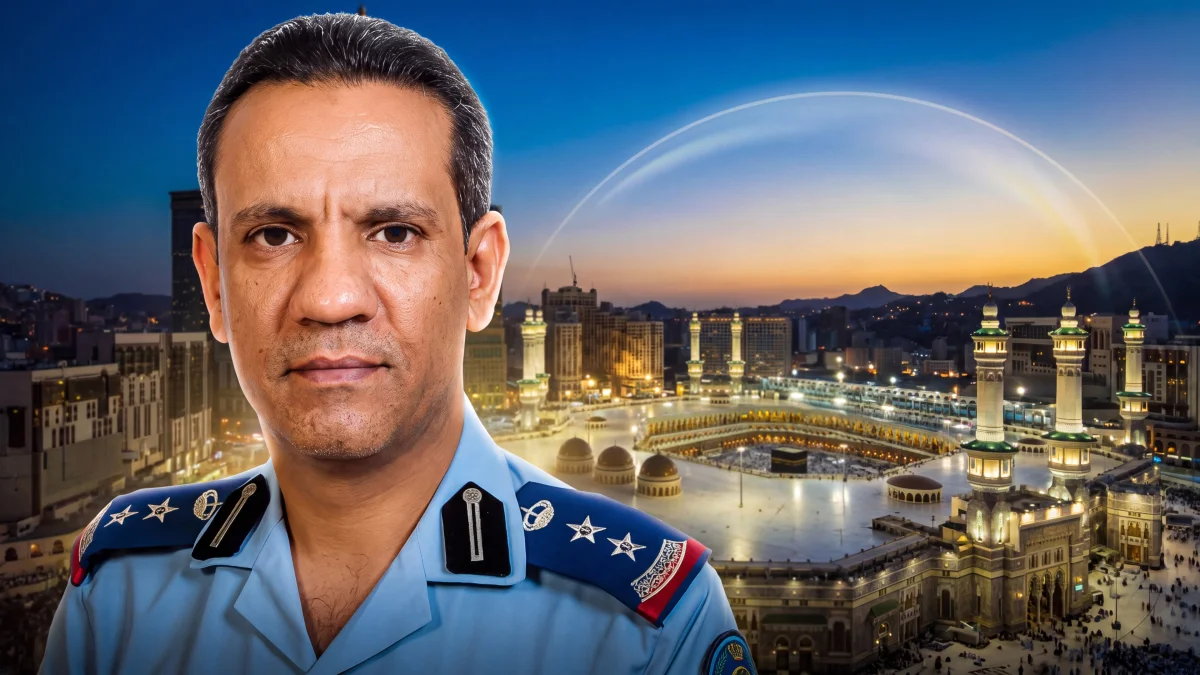
Saudi Arabia said it intercepted a Houthi drone on the approaches to Mecca on Tuesday, framing the holy city’s security as a “red line” and drawing swift condemnation across the Muslim world even as the Iran-backed Yemeni group denied aiming at sacred sites. CNN reported that coalition spokesman Turki al-Maliki called the incident the first Houthi attempt on Mecca in nearly a decade, since a ballistic missile was intercepted in 2017, and warned that Riyadh “will not hesitate to take the necessary and deterrent measures.”
NBC News placed the interception south of Mecca just before 7 p.m. local time Tuesday (12 p.m. ET), citing Maj. Gen. Turki al-Malki’s statement that air defenses destroyed the drone before it entered restricted airspace over the city. Mecca — birthplace of the Prophet Muhammad and destination for millions of pilgrims each year — is among Islam’s most sensitive sites, which is why the kingdom’s claim landed as both a security alert and a religious-political escalation.
The Houthis rejected the accusation outright. Military spokesman Yahya Saree said early Wednesday that the group’s targets were Saudi oil facilities and military bases “far removed from the holy places,” accusing Riyadh of “fabrications and lies,” according to CNN. That denial has not muted regional outrage: the Organization of Islamic Cooperation condemned strikes that “violate the sanctity of holy sites,” and Pakistani Prime Minister Shehbaz Sharif — whose government recently signed a joint defense pact with Saudi Arabia — called the alleged attempt a “dastardly and heinous” act, NBC and CNN both noted.
The Mecca flashpoint sits inside a wider Red Sea and Yemen crisis that has already rattled energy markets. CNN reported Houthi ballistic missiles and drones hitting several Saudi cities earlier in the week, including Khamis Mushait, Abha, and Taif, with 13 civilians injured, plus claimed attacks on a Saudi military base and, on Wednesday, a Saudi Aramco facility in Yanbu. Saudi forces answered with airstrikes into Houthi-held Yemen. NBC added that the United States on Wednesday raised its Saudi travel advisory to Level 3, urging Americans to “reconsider travel” and restricting government employees near the Yemen border.
Oil logistics are already strained. CNN cited trader Ashley Hikmet saying Saudi Arabia suspended loadings at Yanbu — its primary Red Sea export terminal — after weekend attacks, with satellite tracking showing no Saudi crude leaving Red Sea ports since Saturday, and Aramco notifying some European customers of supply cuts until mid-November. Brent crude hovered near $108 a barrel early Wednesday, NBC reported, while U.S. diesel averages hit another record high. Those price signals matter because Houthi gains around the Bab el-Mandeb Strait threaten a backup corridor for Saudi exports while Iran’s leverage over the Strait of Hormuz remains a parallel choke-point risk.
Analysts reading the deep-strike capability, not only the Mecca dispute, see a demonstration of Houthi reach. New America fellow Adam Baron told NBC that whether the intended target was Mecca or not, “the fact that they were able to strike this deep in Saudi Arabia is really a signal toward their capacity, if not future intentions.” CNN’s reporting likewise tied the interception to a rapid Houthi advance that recently captured a Red Sea port city and an island near a critical waterway, compressing Riyadh’s options as Washington has shown little appetite for a new Yemen theater.
Diplomatically, the United Nations Security Council held an emergency session Tuesday on escalating Yemen violence, with members urging de-escalation, NBC reported. The U.N. also warned that fighting between Saudi-backed government forces and the Houthis has displaced at least 125,000 people since the start of September. That humanitarian toll sits beside the sacred-site controversy: for Saudi officials, portraying Mecca as under threat mobilizes Islamic solidarity; for the Houthis, denying any holy-site targeting seeks to blunt that narrative while they press oil and military objectives.
For now, the confirmed facts are limited but consequential: Saudi air defenses say they destroyed a drone south of Mecca before it entered restricted airspace; Riyadh calls holy-city security a red line; the Houthis deny any such target; OIC and Pakistani leadership have condemned the alleged attempt; and Red Sea export disruptions plus three-digit oil prices show how quickly Yemen’s war is spilling into global energy and pilgrimage-season anxiety. Dual reporting from CNN and NBC on Sept. 16 keeps the Mecca claim, the Houthi denial, and the wider Red Sea escalation in the same frame — a religious red line colliding with a maritime and oil crisis that is still widening.
What's Your Reaction?
 Like
0
Like
0
 Dislike
0
Dislike
0
 Love
0
Love
0
 Funny
0
Funny
0
 Wow
0
Wow
0
 Sad
0
Sad
0
 Angry
0
Angry
0

"iShook Opinion" by Beni E Rachmanov, CEO & Founder of iShook. Explore captivating perspectives on entertainment, lifestyle, and sports at ishookdaily.com. Your go-to for engaging insights.















Comments (0)