
Modi and Xi Pledge Border Peace and Partner Status After BRICS Sidelines Meeting in New Delhi
After meeting on the sidelines of the New Delhi BRICS Summit, Modi and Xi reaffirm a fair border settlement, peace along the Line of Actual Control, and a partners-not-rivals framing, per Indian and Chinese readouts covered Sept. 14–15.
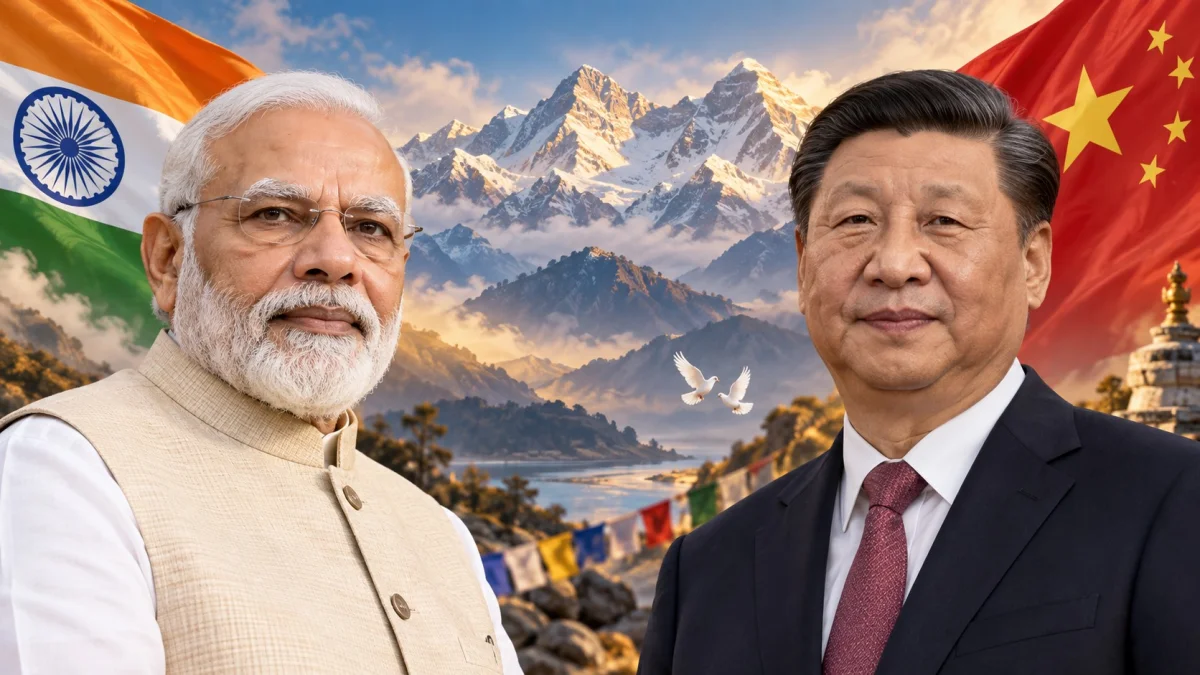
Indian Prime Minister Narendra Modi and Chinese President Xi Jinping used a sidelines meeting at the 18th BRICS Summit in New Delhi to restate a carefully worded thaw: both sides should treat each other as partners rather than rivals, keep peace and tranquillity along the contested border, and pursue a “fair, reasonable and mutually acceptable” boundary settlement, Channel News Asia and India Today reported as Chinese and Indian readouts circulated into September 14–15, 2026.
Xi’s New Delhi stop—his first visit to India since 2019—was already a diplomatic signal after years of strained ties following the 2020 Galwan clashes. India’s Ministry of External Affairs said the leaders welcomed “steady progress” since their August 2025 Tianjin encounter, stressed a strategic long-term view, and insisted that “differences should not become disputes,” The Hindu and CNA recounted. Modi underlined that peace on the border remains an “essential basis” for broader bilateral development—language New Delhi has used whenever talks risk floating free of ground realities along the roughly 3,500-kilometre high-altitude frontier where both militaries still maintain heavy deployments.
Chinese Foreign Minister Wang Yi, summarizing Xi’s two-day visit in remarks carried by India Today on September 14, called the leaders’ agreement that China and India “should be partners” the “most important consensus” of the exchange. Wang said Xi framed the relationship as one in which the two countries can draw on each other’s strengths and pursue common development, while urging that border management and overall ties move forward in parallel rather than as a zero-sum sequence. Chinese Foreign Ministry spokesman Guo Jiakun added that Beijing would work with New Delhi to lengthen the cooperation list, deepen people-to-people exchanges, and support each other’s development as China prepares to take the BRICS chair in 2027—with India pledging support for that chairmanship in the Chinese account.
Trade and connectivity sat alongside security talk. CNA noted that China is now India’s largest trading partner, with bilateral goods trade reaching about US$151 billion in the 2025–26 financial year, according to Indian government data cited in the report. Both sides flagged structural trade imbalance and supply-chain concerns; Indian statements emphasized “three mutuals”—mutual respect, mutual sensitivity and mutual interest—while Chinese readouts stressed that New Delhi’s China policy is “independent” and “not affected by any third party,” including unchanged positions on Taiwan and Tibet as presented in Beijing’s version of the conversation. Expanded direct flights and cultural links were listed among practical next steps intended to improve public perception on both sides of the Himalaya.
The meeting also sat inside a wider BRICS agenda. Xi, speaking at the summit on West Asia, called for BRICS members to uphold peace and oppose bloc confrontation, according to CNA’s account of Chinese messaging—language that places India-China stabilization inside a Global South diplomacy frame even as the bilateral border file remains unfinished. The Hindu recalled that people-to-people thaw markers, including the 2026 Kailash Manasarovar Yatra, had already resumed after two years of gradual repair work.
None of the published readouts claimed a final border map, a verified troop pullback timetable, or a new delimitation treaty. The verified mid-September record is narrower and still consequential: leaders meeting in person, shared partner language, renewed commitment to border peace, pledges to expand flights and cultural links, and mutual support for BRICS chairmanships. For Daily News readers tracking Asia’s two largest neighbors, the BRICS sidelines encounter is a stabilization story, not a settlement—one that will be judged by whether Line of Actual Control quiet holds when the summit lights go out and Special Representatives resume the slower cartography of the next round.
Related: NATO Baltic escalation after Lithuania drone and Denmark flares.
What's Your Reaction?
 Like
0
Like
0
 Dislike
0
Dislike
0
 Love
0
Love
0
 Funny
0
Funny
0
 Wow
0
Wow
0
 Sad
0
Sad
0
 Angry
0
Angry
0

"iShook Opinion" by Beni E Rachmanov, CEO & Founder of iShook. Explore captivating perspectives on entertainment, lifestyle, and sports at ishookdaily.com. Your go-to for engaging insights.















Comments (0)