
Zelenskyy Says Ukraine Will Support Energy De-Escalation Only If Partners Lock In Russia’s Commitment
President Zelenskyy says Kyiv will back a U.S. push to halt energy strikes only if Washington can secure Russia’s genuine, long-term readiness to stop hitting Ukrainian infrastructure.
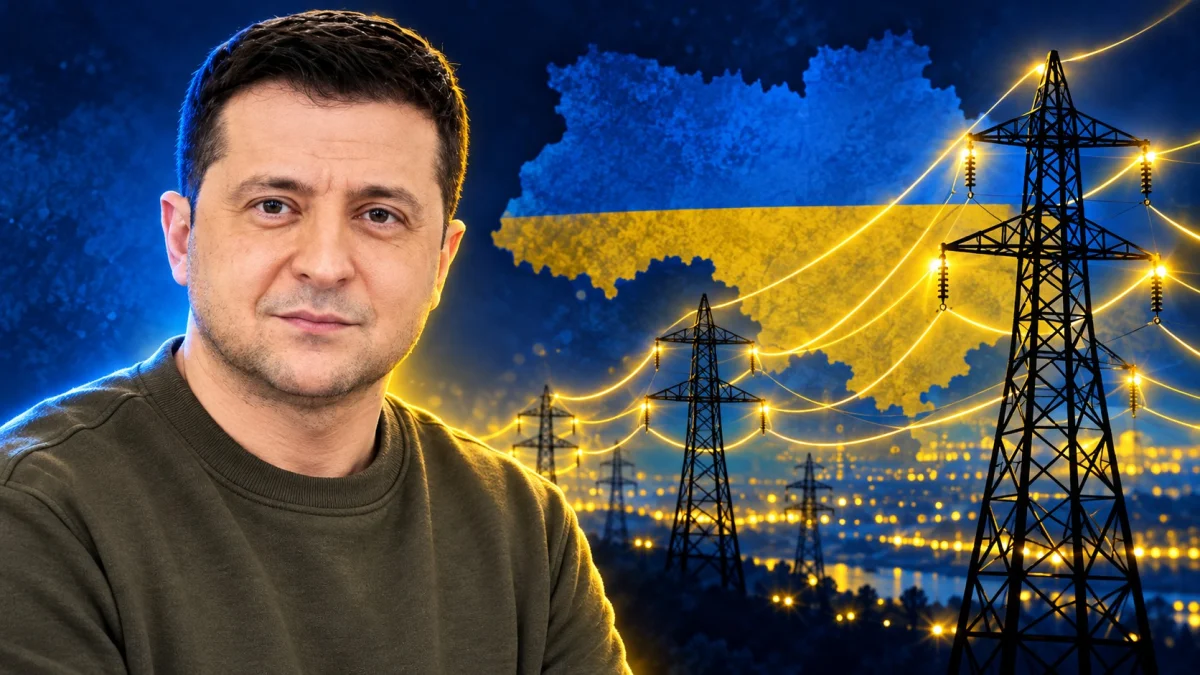
Ukrainian President Volodymyr Zelenskyy said on Monday, September 14, 2026, that Kyiv is prepared to support a U.S. proposal for a mutual halt to strikes on energy and critical infrastructure—but only if American partners can ensure that Russia is sincerely ready to end attacks that have battered Ukraine’s power system for years, Reuters and France 24 reported.
The clarification followed a social-media claim by U.S. President Donald Trump that “Ukraine has agreed not to hit Russian Energy targets. Russia has agreed to do, likewise!” Russia offered no immediate confirmation in the accounts reviewed for this report. Zelenskyy, in his nightly address and related remarks, framed Washington’s idea as a “strong proposal” rather than a finished deal. “If this can become the first de-escalatory step, a step towards ending Russian strikes against our critical infrastructure and our strikes in response, Ukraine is ready to support de-escalation,” he said, according to Reuters.
He was explicit about the missing piece: trust and enforcement. “So far, no one has seen any genuine willingness on Russia’s part to bring the war to an end,” Zelenskyy said in the Reuters account. “But if our American partners can secure Russia’s genuine readiness to end the war aimed at destroying lives, and to do so honestly and on a long-term basis, Ukraine will take its own de-escalatory steps.” Earlier posts from Kyiv, Reuters noted, amounted to a denial that Ukraine had formally endorsed Trump’s description of a completed agreement.
The stakes are practical as well as diplomatic. Russia’s campaign against Ukrainian electricity and heating networks has repeatedly disrupted civilian life and industry across more than four years of full-scale war. Ukraine, for its part, has struck Russian industrial and oil infrastructure in a bid to squeeze Moscow’s war economy—attacks that Trump has publicly linked to diesel shortages and rising fuel costs ahead of U.S. midterm elections, France 24 reported. International oil markets were already sensitive to Middle East shipping risks in the same week; any genuine pause in energy targeting would be watched as tightly as a battlefield map.
Zelenskyy’s conditions also arrived amid fresh alarms about Russian strikes near Ukraine’s western borders. France 24, citing AFP, reported that Ukrainian Railways CEO Oleksandr Pertsovsky said attacks on the rail network are worsening “exponentially” week by week, after a weekend strike hit a train near the Polish border corridor frequently used by diplomats. Polish officials said the strike occurred about two kilometres from the border. Those incidents sit outside any proposed energy-only pause, underscoring why Kyiv is asking for specifics rather than accepting a headline as policy.
EU diplomacy supplied a separate reminder that pressure on Moscow can slip even when capitals talk about unity. France 24 reported that EU ambassadors delayed a deadline for renewing a sanctions list covering nearly 3,000 individuals and entities after France sought to remove metals tycoon Alisher Usmanov—an effort other governments resisted. Ireland, holding the EU presidency, said renewing listings remains essential to undermining Russia’s war machine.
For Daily News readers tracking how U.S. messaging, Ukrainian conditions, and European sanctions interact, Monday’s story is not a ceasefire announcement. It is a conditional opening: Kyiv says it will match a halt on critical-infrastructure strikes if partners can prove Russia will do the same for the long term. Until that proof arrives, the verified facts remain Trump’s claim, Zelenskyy’s caveats, Russia’s silence in immediate reporting, and a war in which energy and transport targets still define daily risk.
Related: Saudi Arabia response as Houthi strikes raise Hormuz risks.
What's Your Reaction?
 Like
0
Like
0
 Dislike
0
Dislike
0
 Love
0
Love
0
 Funny
0
Funny
0
 Wow
0
Wow
0
 Sad
0
Sad
0
 Angry
0
Angry
0

"iShook Opinion" by Beni E Rachmanov, CEO & Founder of iShook. Explore captivating perspectives on entertainment, lifestyle, and sports at ishookdaily.com. Your go-to for engaging insights.















Comments (0)